
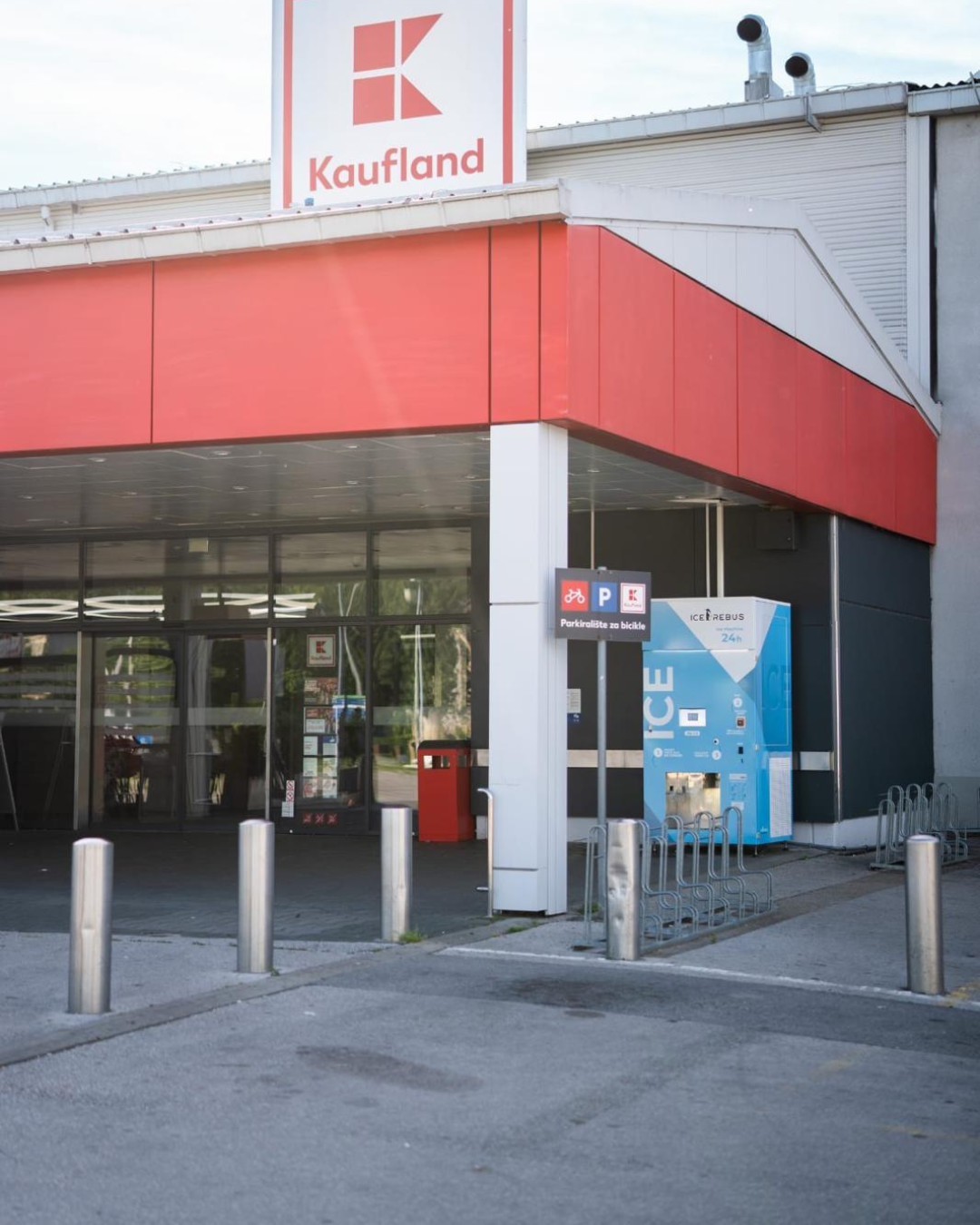
What happens when ice is produced directly where customers buy it?
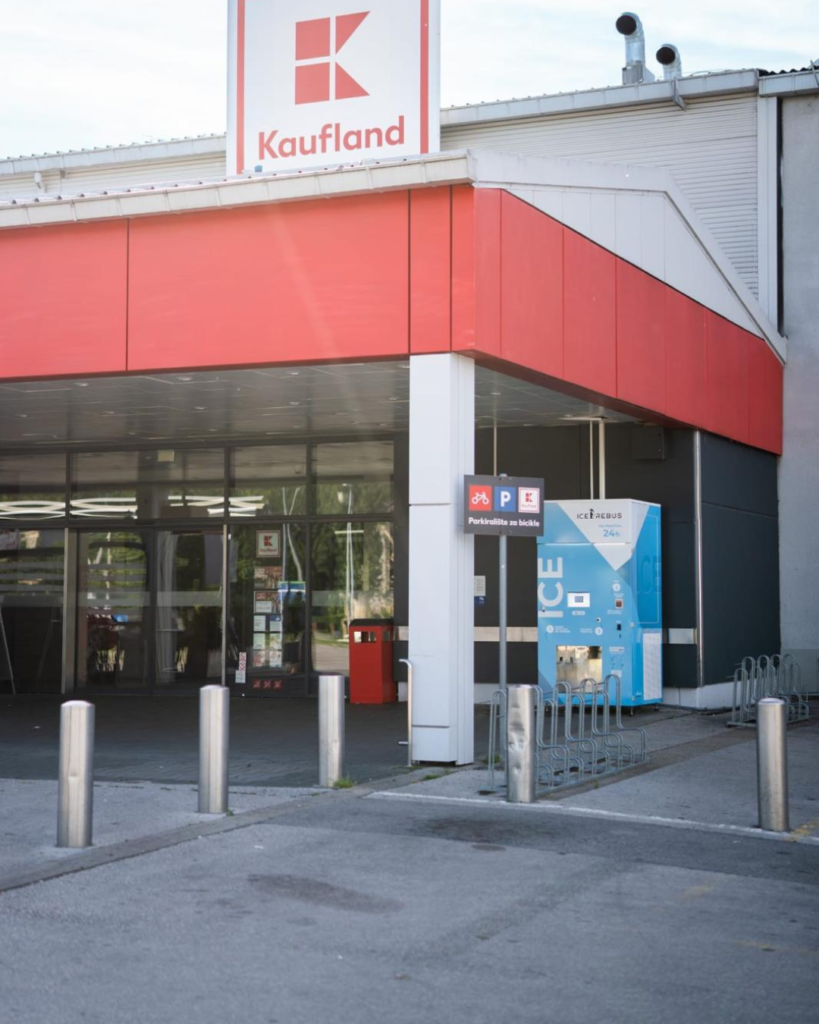
During the 2026 season, Ice Rebus operated ice vending machines at five Kaufland locations across Croatia, offering customers access to freshly produced ice while reducing the need for traditional packaged-ice deliveries.
The results provide a practical example of how on-site ice production can support retail operations, create additional sales opportunities, and reduce the environmental impact associated with ice distribution.
Between April 1 and October 24, 2026, the five locations recorded 8,667 bags of ice sold, with an estimated 635 deliveries avoided, approximately 31,750 kilometres of delivery driving eliminated, and 2,600 single-use plastic bags avoided.
These findings are documented in the Kaufland × Ice Rebus 2026 Season ESG Performance Report, using operational data from the machines and stated assumptions for environmental estimates.
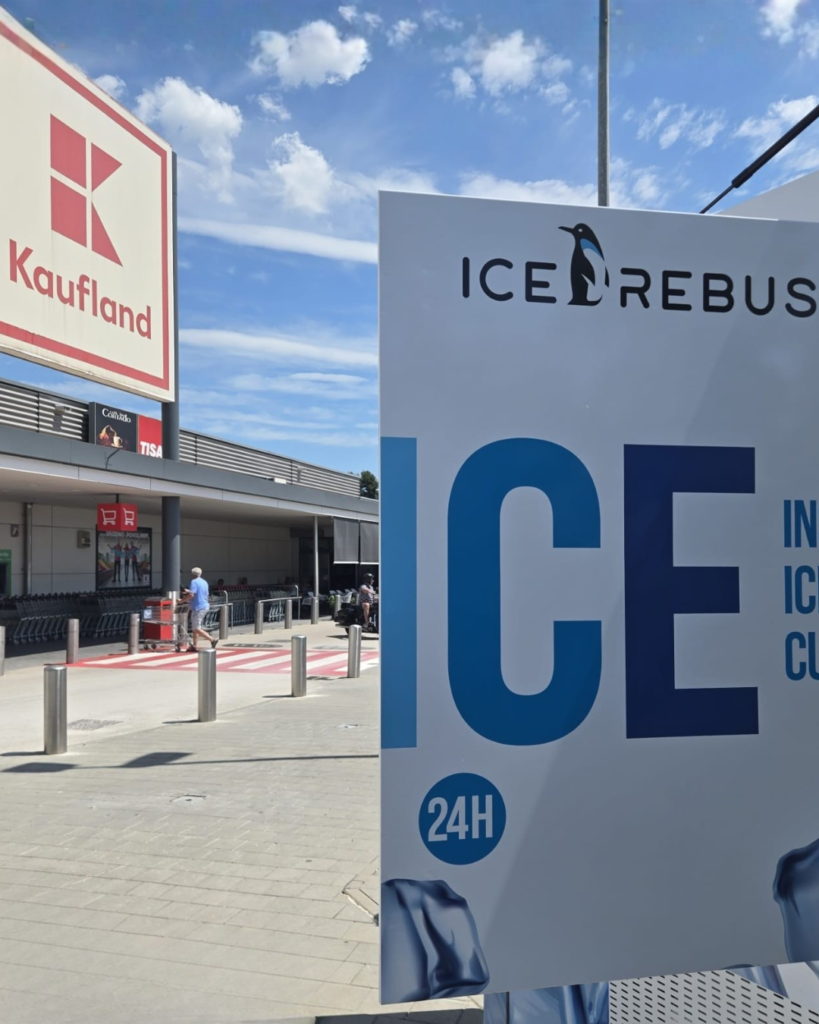
The 2026 Season at a Glance
Across the five Kaufland locations, the Ice Rebus network recorded:
| Indicator | 2026 result |
|---|---|
| Ice sold | 8,667 bags (approximately 17.3 tonnes) |
| Gross sales | €17,800 |
| Estimated packaged-ice deliveries avoided | 635 |
| Estimated delivery driving avoided | 31,750 km |
| Estimated delivery-related emissions avoided | 9.5 tonnes CO₂e |
| Single-use plastic bags avoided | 2,600 |
| Customers using their own bags or coolers | 30% |
The results cover the reporting period from April 1 to October 24, 2026. Individual locations began operating on different dates during the season.
Five Locations, Different Retail Environments
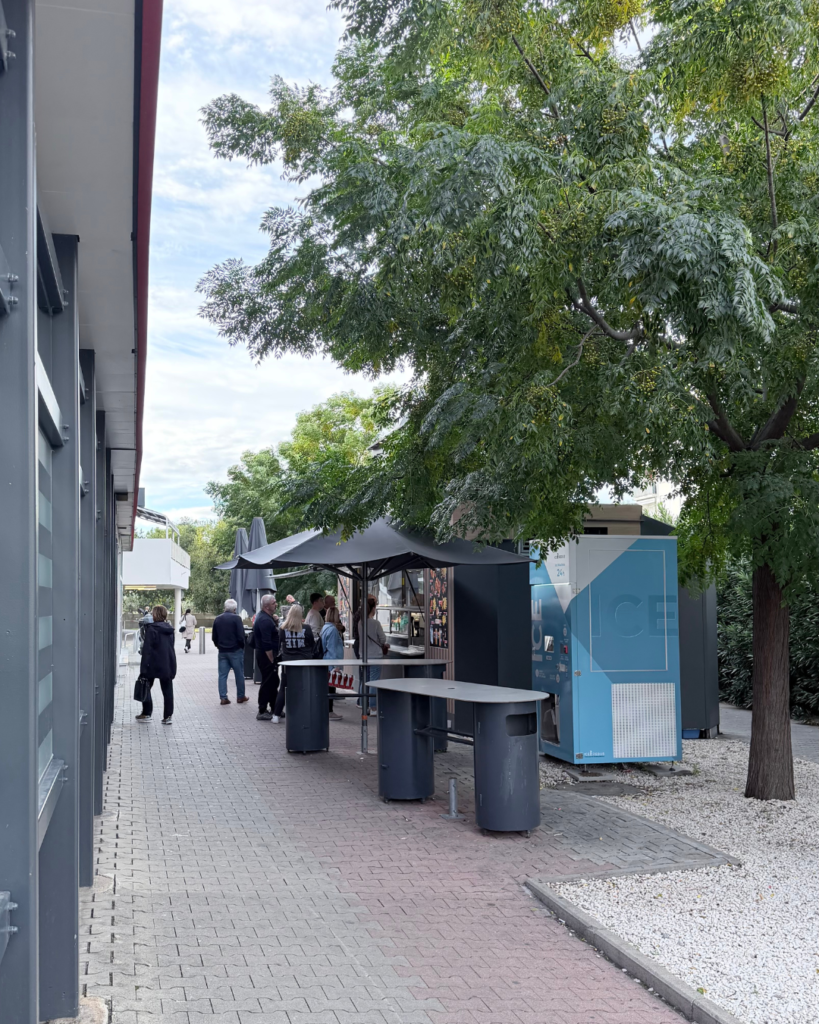
The Ice Rebus machines operated at five Kaufland locations:
- Krk
- Zagreb–Dubrava
- Trstenik
- Trogir
- Brda
Each location contributed to the overall results, offering insight into how ice vending performs across different customer environments.
Reducing Ice Delivery Logistics
Traditional packaged-ice retail depends on producing ice elsewhere, transporting it to stores, and maintaining suitable storage conditions until purchase.
On-site ice vending changes that process.
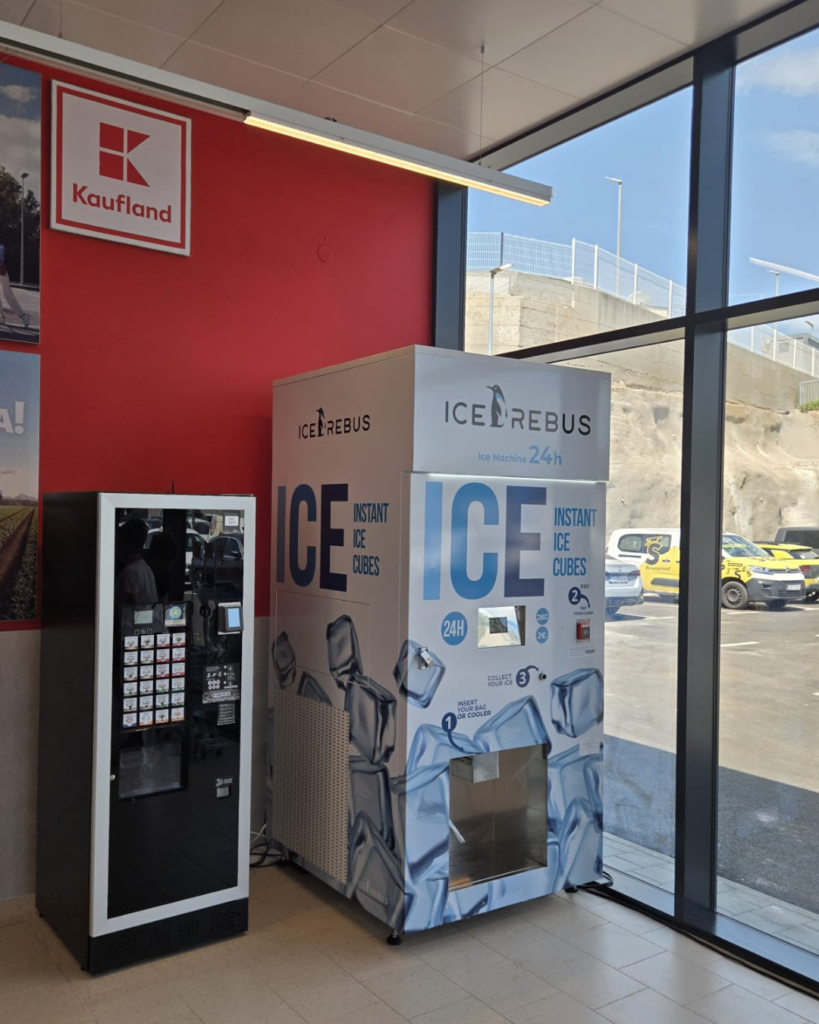
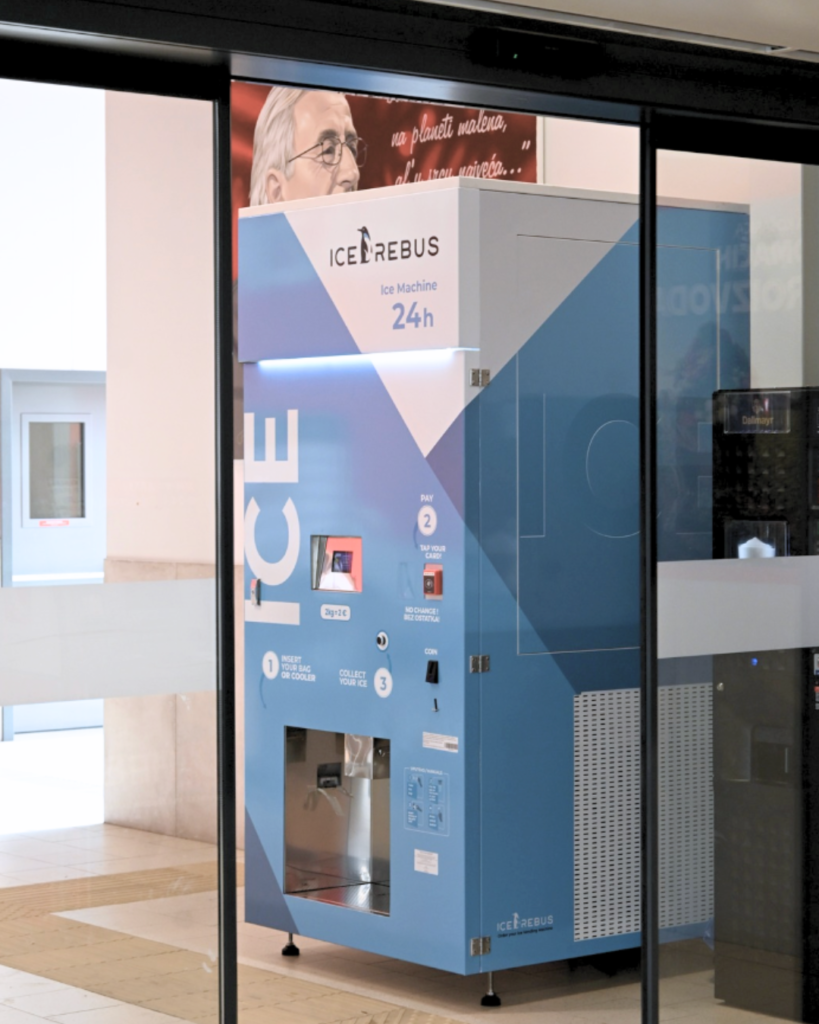
Ice Rebus machines produce and store ice directly at the retail location, making it available to customers through an automated self-service system.
For the Kaufland network, the 2026 ESG report estimates that this approach replaced 635 packaged-ice deliveries during the season.
Using an assumed 50-kilometre round trip per delivery, this represents approximately 31,750 kilometres of avoided delivery driving.
The corresponding estimated reduction in delivery-related emissions was 9.5 tonnes of CO₂e.
These figures specifically concern avoided transportation. They do not represent a complete lifecycle carbon assessment, and ice-production energy was excluded from the comparison because ice must be produced under either distribution model.
Nevertheless, the results illustrate how producing ice at the point of sale can reduce reliance on conventional distribution logistics.
Less Single-Use Plastic Through Customer Choice
Another significant finding concerned packaging.
During the reporting period, 30% of purchases involved customers bringing their own bags or coolers instead of using a new single-use plastic bag.
Across the five locations, this resulted in approximately 2,600 plastic bags avoided.
Providing customers with the option to collect ice in their own containers creates an opportunity to reduce disposable packaging while maintaining a convenient purchasing experience.
The results also demonstrate how customer behaviour contributes to the environmental performance of a retail solution.
A Retail Solution That Works Beyond Traditional Store Hours
Convenience is another important part of the Ice Rebus model.
The machines are designed for automated self-service, allowing customers to purchase ice without requiring dedicated staff at the point of sale.
During the Kaufland season, 41% of total ice sales took place on weekends, while Sundays and public holidays accounted for 20% of the total volume.
These figures are particularly relevant in Croatia, where retail trading hours can be restricted on certain Sundays and public holidays.
The machines recorded 1,731 bags sold on Sundays and public holidays during the reporting period, illustrating the role that automated retail can play in meeting customer demand outside conventional shopping schedules.
Connected Technology Behind the Results
The Kaufland case also demonstrates the importance of operational data in unattended retail.
Ice Rebus machines use connected technology to record transactions and support remote monitoring.
Through the company’s proprietary V-CORE platform, operators can access machine information and manage aspects of their operations remotely.
For this project, transaction-level data provided the basis for analysing sales performance by location, month, and day.
The report also documents machine-level measurements and operational information, including electricity and water consumption.
This visibility helps operators understand how machines perform in different environments and provides a foundation for ongoing operational decisions.
What Can Retailers Learn from the Kaufland Case?
The 2026 Kaufland results highlight several considerations for retailers evaluating on-site ice production.
Location matters. Sales performance varied significantly between sites, demonstrating the importance of understanding local demand and customer traffic.
Seasonality matters. Most sales occurred during the summer months, making seasonal demand an important factor in evaluating commercial potential.
Logistics matter. Producing ice at the point of sale can reduce the need for recurring packaged-ice deliveries and associated handling.
Customer choice matters. Allowing customers to use their own containers can contribute to reducing single-use packaging.
Operational data matters. Connected machines provide information that can help operators evaluate performance and make informed decisions.
While results will differ by location, market, and operating conditions, the Kaufland experience provides a documented example of on-site ice vending in a real retail environment.
A Different Approach to Ice Retail
The Kaufland × Ice Rebus 2026 season demonstrates how ice vending can combine commercial performance, customer convenience, and measurable operational outcomes.
With 8,667 bags sold across five locations, alongside estimated reductions in delivery kilometres, transportation emissions, and single-use packaging, the project offers useful insights into the potential of producing ice directly where it is sold.
For Ice Rebus, the case reinforces the value of combining on-site production with connected technology and real-world operational experience.
What could on-site ice production look like at your location?
Explore Ice Rebus technology and opportunities for your business at www.icerebus.com.
About the Data
This article is based on the Kaufland × Ice Rebus 2026 Season ESG Performance Report, covering five Croatian locations between April 1 and October 24, 2026.
Sales figures, transaction volumes, and certain operational indicators were recorded through machine telemetry. Avoided deliveries, delivery kilometres, and transportation-related CO₂e are estimates based on the report’s stated methodology.
The emissions comparison excludes energy used to produce ice and should not be interpreted as a full lifecycle carbon footprint assessment.
Leave a Reply