
Convenience used to mean being close. Today, it increasingly means being available.
People bank at any hour, order food late at night, charge cars while they sleep, collect packages after work, and expect access to products and services without depending entirely on traditional opening hours. That change is creating a wider shift in retail. The 24/7 economy is not only about staying open longer. It is about designing businesses around access.
Customers Are Already Used to On-Demand Access
Across industries, the same pattern is becoming normal. Consumers expect speed, simplicity, and availability. They do not always want to wait for staff, queue at a counter, or plan their day around store hours. Self-service banking made this normal years ago. Parcel lockers extended collection beyond traditional delivery windows. EV charging turned parking spaces into service points. Automated retail is now applying the same logic to more product categories. The expectation is simple: If the customer needs something now, the business should be able to respond.
Convenience Is Becoming Infrastructure
This is where the shift becomes interesting for B2B operators. Convenience is no longer only a customer-service feature. It can become part of the physical infrastructure of a location. Forecourts, supermarket exteriors, parking areas, marinas, campsites, hospitality locations, and other high-traffic environments can all support services that operate independently from the traditional staffed retail space. That means a location can continue creating value even when the main business is closed or when staff are focused elsewhere. The site itself becomes more productive.
The Value of Physical Space Is Changing
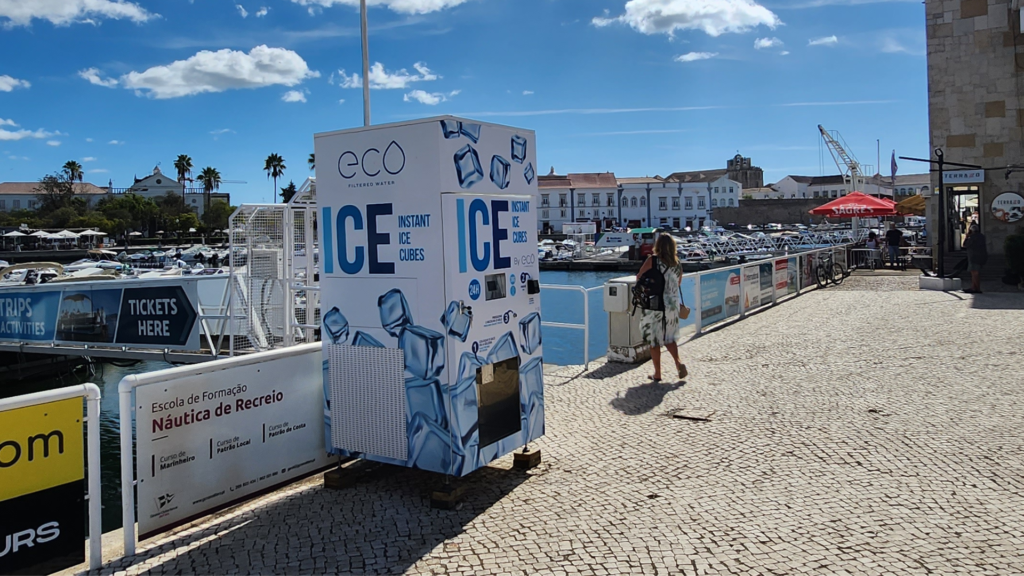
For years, retailers measured space mainly through shelves, counters, and indoor sales areas. Unattended retail changes that calculation. A relatively small exterior area can become a separate service point. A forecourt can offer more than fuel. A supermarket car park can support more than parking. A marina can provide services outside reception hours. The important question is no longer only: How much space do we have? It is: What can that space do? That is one of the clearest opportunities within the 24/7 economy.
Unattended Does Not Mean Unmanaged
The strongest 24/7 retail models are not simply machines placed in a location and forgotten. The physical point of sale may be autonomous, but the operation behind it still needs visibility. Modern unattended retail increasingly relies on connected systems that can track performance, payments, uptime, maintenance needs, alerts, and customer demand remotely. That combination matters. Automation reduces the need for constant on-site staffing. Connectivity gives operators the information needed to manage the business effectively. The result is not “no management.” It is a different kind of management.
Ice Fits Naturally Into the 24/7 Economy
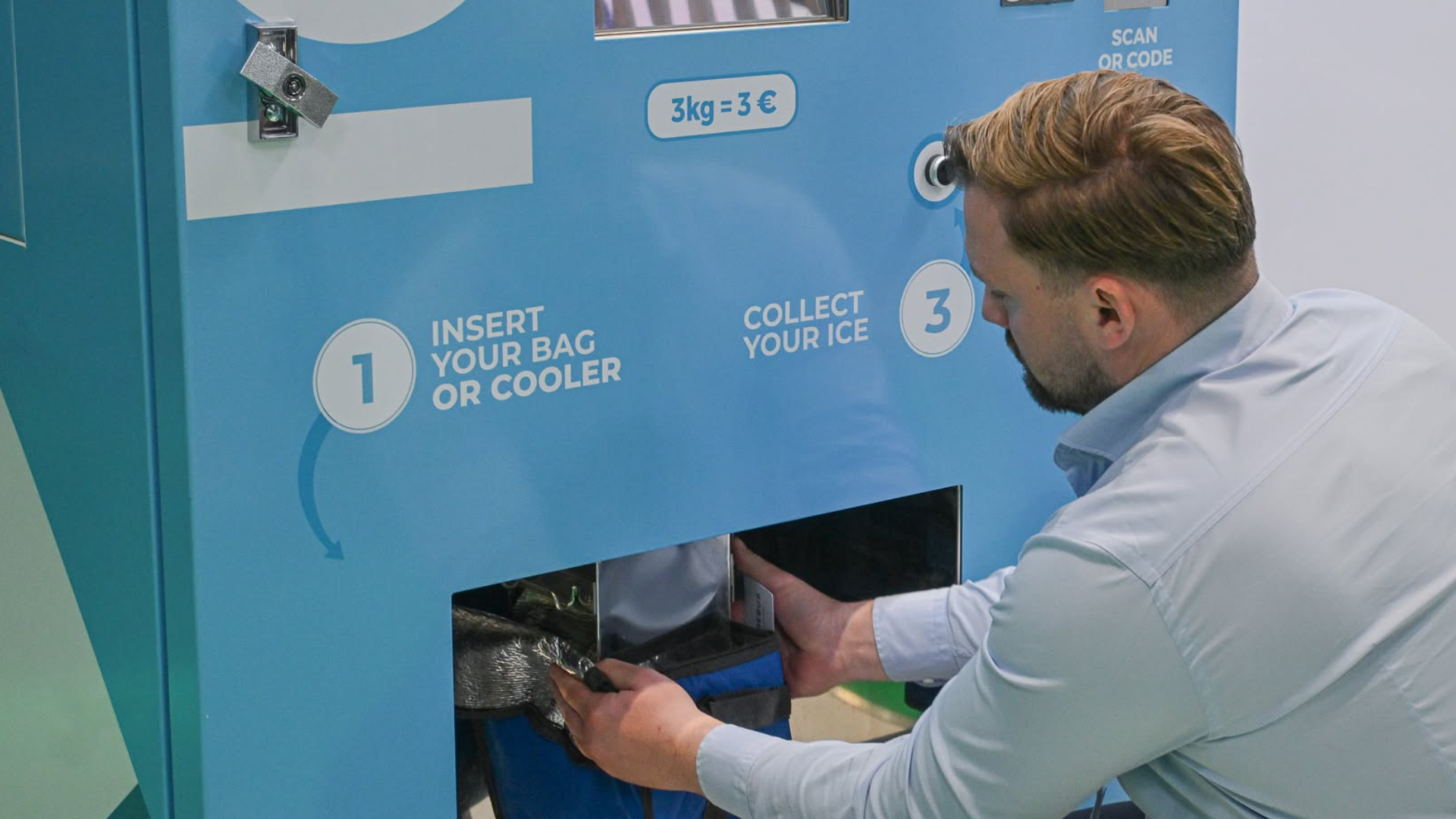
Ice is a simple example of how this model can work. Customers often need it immediately. For drinks. Hospitality. Events. Travel. Boating. Camping. Retail. Social gatherings. Waiting for a freezer to produce enough ice is not always practical, and traditional packaged ice depends on stock being available at the right place and time. Ice Rebus moves production directly to the point of demand. The machine produces, stores, and dispenses fresh ice on site, allowing customers to access it 24/7 without relying on a staffed counter. For the customer, the experience is simple. For the operator, the infrastructure behind it is connected.
The Role of Technology
Every connected Ice Rebus machine works through V-CORE, our proprietary cloud platform. That gives operators visibility into machine performance, sales, alerts, maintenance, and operational activity remotely. For a single site, that creates control. Across multiple locations, it creates scale. This is where unattended retail becomes more interesting for chains and multi-site operators. One location can prove a concept. A connected network can turn that concept into a repeatable retail category.
The Opportunity for Existing Locations
The 24/7 economy does not always require building something new from scratch. In many cases, the opportunity already exists within the location. The traffic is already there. The parking is already there. The customer relationship already exists. The question becomes whether another product or service can be added without creating another staffed operation.
For forecourts, retailers, hospitality groups, marinas, and other high-traffic businesses, that can open a different conversation around location economics. A site can do more without becoming operationally heavier.
The New Standard of Convenience
The direction is already clear. Customers increasingly expect access when they need it. Businesses are finding ways to extend availability without extending traditional staffing models. And physical locations are becoming more flexible, connected, and productive. The 24/7 economy is not about replacing every traditional retail experience. It is about recognizing where customers value immediate access and designing the infrastructure around that need.
For Ice Rebus, that means making fresh ice available where demand already exists — around the clock, through connected technology. Because convenience is no longer only about being nearby. It is about being available.
Leave a Reply